

The era of the pristine, ad-free scroll on Threads is officially coming to an end. In a landmark announcement made yesterday, Meta Platforms Inc. confirmed that it will begin displaying advertisements to Threads users globally starting as early as next week.
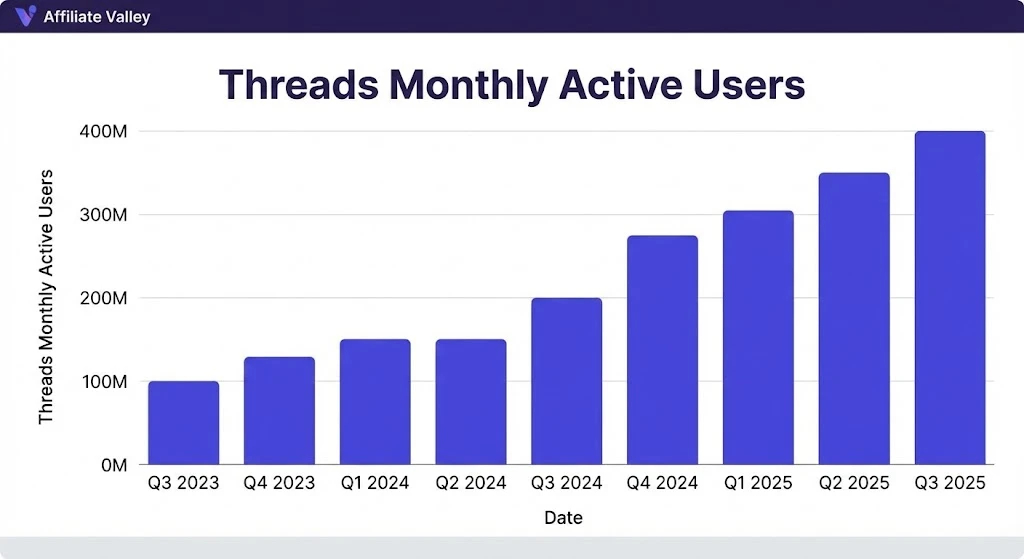
The move marks the final phase of Meta’s long-term strategy to monetize its “Twitter Killer” app, which has grown from a chaotic launch in 2023 to a mature platform boasting over 400 million monthly active users (MAU) today.
According to the official statement released by Meta’s business division, the rollout will be gradual. While the first wave of global ads will appear in feeds starting next week, the company notes that a “full deployment” of the feature across all regions and user segments may take several months to complete.
For digital marketers, this is the moment they have been waiting for since 2025. For users, it is the inevitable conclusion to the platform’s “growth-first” phase. This article analyzes the rollout, the integration with Meta Ads Manager, and the seismic shift this causes in the 2026 social media landscape.
Turning on the Revenue Tap
Yesterday’s announcement puts an end to months of speculation. While Mark Zuckerberg, Meta’s CEO, famously stated in the early days of Threads that the company wouldn’t focus on monetization until the app was “on a clear path to 1 billion people,” the economic reality of 2026 has accelerated that timeline.
Reaching 400 million active users is a significant milestone, cementing Threads as the undisputed successor to the text-based social media throne, surpassing competitors like Bluesky and posing an existential threat to X (formerly Twitter).
The Rollout Timeline
- Phase 1 (Next Week): Users in major markets (North America, UK, Australia, and select EU nations) will begin seeing “Sponsored” posts in their algorithmic “For You” feeds.
- Phase 2 (Q1-Q2 2026): The frequency of ads will increase, and placements will expand to “Following” feeds and search results.
- Phase 3 (Mid-2026): Full global saturation, where ad density on Threads mirrors that of Instagram.
In its statement, Meta emphasized a cautious approach:
“We are taking a measured approach to introducing ads to ensure we maintain the high-quality user experience that the Threads community values. Full deployment will occur over several months.”
This gradual ramp-up is designed to prevent “ad shock”—a sudden drop in user retention caused by an overwhelming influx of commercial content.
From 2025 Testing to 2026 Scaling
The road to this moment began quietly in 2025. As highlighted in yesterday’s release, Meta opened access to Threads inventory for select advertisers via Meta Ads Manager last year.
The 2025 Beta Phase
Throughout 2025, ads were visible only to users in specific test markets. This period allowed Meta to refine the algorithm. Unlike Instagram (visual) or Facebook (mixed), Threads is text-heavy. Meta needed to train its AI to understand:
- Contextual Relevance: Ensuring an ad for sneakers doesn’t appear below a serious political discussion.
- Format Fluidity: Testing how carousel ads and video reels perform in a rapid-scroll text environment.
- CTR Benchmarks: Establishing baseline Click-Through Rates to price the inventory correctly.
The results of the 2025 tests were reportedly bullish. Advertisers praised the “brand safety” of the platform compared to the volatility of X, leading to high demand for a global release.
The Advertiser’s Perspective: Why This Matters
For the global marketing industry, the opening of Threads inventory is the biggest news of Q1 2026.
Seamless Integration via Meta Ads Manager
The true power of this rollout lies in its backend. Threads is not a standalone ad platform; it is simply a new placement within the existing Meta Ads Manager ecosystem.
- No Learning Curve: Media buyers do not need to learn a new tool. They simply check a box labeled “Threads” alongside “Instagram Feed” and “Facebook Stories.”
- Advantage+ Placements: Meta’s AI-driven “Advantage+” campaigns will now automatically inject creative into Threads when the algorithm predicts a high probability of conversion.
- Unified Targeting: Advertisers can target a user on Threads based on their behavior on Instagram. If a user likes vegan cooking videos on Reels, they will see vegan meal kit ads on Threads.
The “Brand Safety” Haven
Since Elon Musk’s takeover of Twitter, major advertisers have been desperate for a text-based platform that offers scale without controversy. “Threads is the safe harbor,” explains Sarah Jenkins, a senior analyst at DigitalStream NYC. “In 2026, brands want to be part of the cultural conversation, but they don’t want their ads appearing next to unmoderated hate speech. Meta has positioned Threads as the ‘friendly’ public square, and brands are willing to pay a premium for that environment.”
The 400 Million User Milestone
The announcement also served as a victory lap for Threads’ growth. Hitting 400 million monthly active users is a staggering achievement.
To put this in context:
- Threads: ~400M MAU (Jan 2026)
- X (Twitter): stagnated/declining figures (estimated ~250-300M authentic users).
- Bluesky: ~25M MAU (niche, but growing).
Who are these users?
The demographics of Threads in 2026 have shifted. Originally just “Instagram users who clicked a button,” the user base has developed its own identity.
- News Junkies: As X deprioritized links, news organizations flocked to Threads.
- Tech & Crypto Twitter Diaspora: The tech community has largely migrated.
- Gen Z: While TikTok remains their entertainment hub, Threads has become their “group chat” for public discourse.
This high-value demographic—educated, mobile-first, and culturally engaged—is exactly who advertisers want to reach.
What the Ads Will Look Like
Users worried about their feeds turning into a billboard wasteland should look to Instagram for clues. Meta is expected to use “Native Advertising” formats that blend into the feed.
1. The “Conversation Starter” Ad
Unlike a display banner, these ads look like a standard Thread. They are text-led, perhaps with a single image or carousel.
- Example: A Netflix ad that poses a question: “What’s the best plot twist you’ve ever seen? 👇” followed by a promotion for their new thriller. This encourages replies, boosting the ad’s algorithmic reach.
2. Carousel Integration
Carousels (swipeable images) have been the highest-performing format on Instagram. On Threads, they appear as a neat, swipeable row of images below a text hook.
3. Video (The Risk)
Meta loves video, but Threads users love reading. The introduction of auto-play video ads is likely to be the primary friction point. If the feed becomes too noisy, users may revolt. Meta will likely cap video ad frequency in the early months.
The Fediverse Complication
One unique challenge for Threads ads is its integration with the Fediverse (ActivityPub protocol). Threads users can share content with users on Mastodon and other decentralized platforms.
However, the ad network is centralized.
- The Wall: When a Threads post is viewed on Mastodon, the ad likely won’t follow it.
- The Implications: This creates a “two-tier” internet. The centralized Threads app is the monetized walled garden, while the decentralized Fediverse connections remain ad-free but harder to monetize. Meta has not yet clarified how it handles commercial content federating to other servers.
Strategic Analysis: Meta vs. The World
Why pull the trigger now? The answer lies in Meta’s stock price and the competitive landscape of 2026.
The Efficiency Mandate
Wall Street continues to demand efficiency. While Reality Labs (Metaverse) continues to burn cash, the “Family of Apps” (Facebook, Instagram, WhatsApp) must generate maximum yield. Leaving 400 million users unmonetized was leaving money on the table. Analysts project that Threads could contribute $3 billion to $5 billion in revenue in 2026 alone, purely by increasing ad inventory supply and reducing the Cost Per Mille (CPM) pressure on Instagram.
The Death Blow to X?
X has struggled to woo back top-tier advertisers. By offering a direct, easy alternative via the Ads Manager that every marketer already uses, Meta is effectively cutting off X’s oxygen. Why would a media buyer manage a separate, volatile ad account on X when they can reach the same audience on Threads with a single click in Meta Business Suite?
User Backlash: The “Enshittification” Cycle
The term “Enshittification” (coined by Cory Doctorow) describes how platforms die: first they are good to users, then they abuse users to make things better for business customers, then they abuse business customers to claw back value for themselves.
Threads is entering the second phase.
- The Feed Change: Users will notice that their feed is no longer just posts from people they follow or highly relevant algorithm picks. Every 4th or 5th post will be sponsored.
- The Algorithm Shift: To serve ads effectively, the algorithm must prioritize content that keeps you on the app longer (stickiness). This often means prioritizing rage-bait or controversial takes—the very thing Threads tried to avoid.
Social media sentiment analysis shows a mix of resignation and frustration.
“It was good while it lasted. RIP the clean feed.” — Common user sentiment on Threads yesterday.
However, history shows that users rarely leave. When Instagram introduced ads, people complained but stayed. When Stories got ads, people complained but stayed. Meta is betting that the network effect of 400 million people is strong enough to withstand the annoyance of advertising.
Best Practices for Marketers in 2026
For businesses preparing for next week’s rollout, the playbook is different from Instagram.
1. Copy is King
Threads is a text-first platform. Re-using a flashy 9:16 Instagram Reel with no caption will fail.
- Strategy: Write a compelling “Hook” in the text. Use the image as support, not the lead. Treat the ad like a tweet, not a billboard.
2. Engage in the Comments
Threads ads allow comments.
- Strategy: Hire community managers to reply to comments on the ad. An ad with an active, funny comment section performs 3x better than a static one.
3. Use “Advantage+ Creative”
Allow Meta’s AI to remix your assets. It might take a headline from your website and a photo from your catalog and generate a Threads-native layout automatically.
Conclusion: The Maturity of Threads
The introduction of global advertising on Threads is not just a feature update; it is a graduation. It signals that the platform has survived the perilous startup phase and has become a permanent pillar of the internet’s infrastructure.
For Meta, it is a new multi-billion dollar revenue stream. For advertisers, it is a high-quality, brand-safe alternative to X. And for the 400 million users, it is a return to the reality of the modern web: if the service is free, you are the product.
As the rollout begins next week, the digital world will be watching closely to see if Meta can balance the delicate scales of profit and user experience, or if the “Twitter Killer” will succumb to the same ad-heavy fatigue that plagues its predecessors.