


The festive season in Moldova was interrupted by the sound of breaking doors and seizing servers. In a coordinated operation that has sent shockwaves through the Eastern European affiliate and operator community, Moldovan law enforcement has executed a massive crackdown on illegal online gambling networks.
On December 24, 2025, the National Investigation Inspectorate (INI), working in tandem with the Anti-Corruption Prosecutor’s Office (PA), raided multiple locations across southern and central Moldova. The targets? Shadow offices allegedly managing offshore iGaming platforms that have been operating in the country without a license.
While official police reports remain tight-lipped regarding specific brand names, local investigative journalists have dropped a bombshell: among the resources being investigated is the global betting giant 1xBet.
This article provides a deep dive into the operation, the legal landscape of Moldovan gambling in 2025, the specifics of the alleged schemes, and what this means for the future of the “Grey Market” in the region.
The Operation: What Happened on December 24?
According to confirmed reports from TV8.md and police statements, the operation was the culmination of a months-long investigation into tax evasion and money laundering facilitated by digital gambling platforms.
The Geography of the Raid
Law enforcement did not limit themselves to the capital, Chisinau. The raids were synchronized across:
- Central Moldova: Likely targeting administrative hubs and server rooms.
- Southern Moldova: Historically a region where cross-border financial flows (often involving neighboring regions) are harder to track.
The Seizure: Digital Evidence
The INI released footage showing officers confiscating a significant amount of hardware. The inventory of seized goods includes:
- Server Racks: Physical servers likely used to host mirror sites or process local payment data.
- Workstations & Laptops: Used by support staff, VIP managers, and “retention agents” who work directly with high-value players.
- Mobile Phones: Crucial for Two-Factor Authentication (2FA) access to banking apps and crypto wallets.
- Draft Records: Physical ledgers detailing P2P (Peer-to-Peer) transfers and “Drop” card networks.
The Human Element
Several individuals were detained immediately. While their identities have not been released, they are suspected of being mid-to-high-level managers responsible for the technical and financial logistics of the offshore platforms. They face charges related to organizing illegal gambling, tax evasion, and money laundering.
The 1xBet Connection: Rumor or Reality?
The most explosive detail from the local media coverage is the mention of 1xBet.
To be clear: There has been no official statement from the Prosecutor’s Office confirming that 1xBet is the primary target. However, journalistic sources close to the investigation have indicated that the infrastructure targeted was facilitating access specifically to 1xBet and its network of mirror sites.
Why 1xBet?
If confirmed, this would not be surprising. 1xBet has a history of friction with national regulators.
- The Offshore Model: 1xBet typically operates under a Curacao license, which allows them to accept players globally. However, Moldova has a strict State Monopoly on gambling. Any site not licensed by the Public Property Agency (APP) is illegal.
- The Mirror System: To bypass Moldovan ISP blocks, offshore operators generate thousands of “mirror” domains (e.g., https://www.google.com/search?q=1xbet-moldova-77.com). The raids likely targeted the local teams responsible for managing these domains and the SMS/Telegram marketing blasts that distribute them to players.
If the Moldovan authorities have seized servers containing the database of local VIP players or the financial logs of P2P merchants servicing 1xBet, this could lead to a cascading legal effect involving thousands of Moldovan citizens who gambled on the platform.
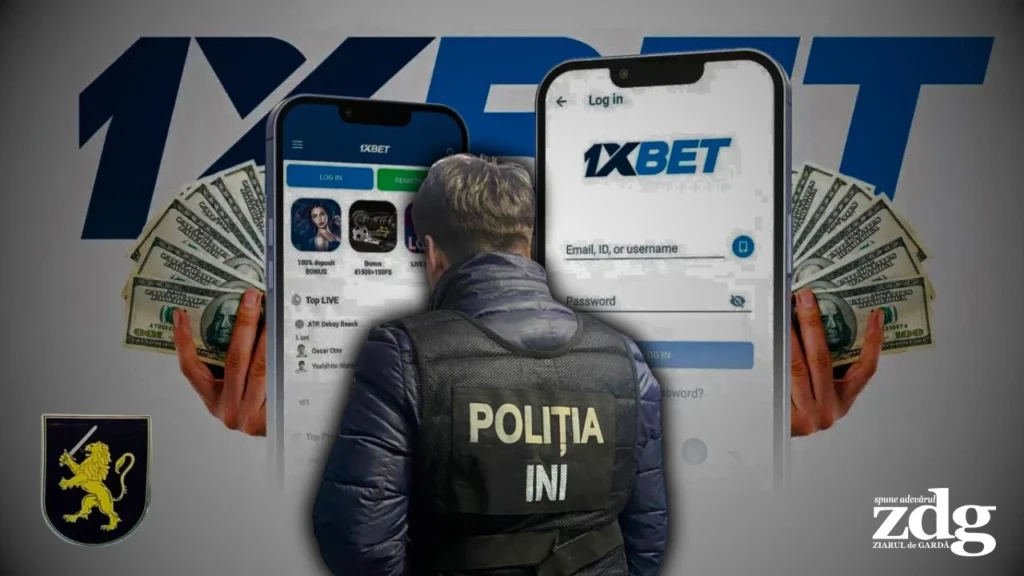
Image source: https://www.zdg.md/ru/na-yuge-i-v-czentre-moldovy-provodyatsya-obyski-u-administratorov-nelegalnyh-onlajn-platform-dlya-azartnyh-igr/
The Legal Context: The Moldovan Monopoly
To understand why these raids happened, one must understand the unique (and often controversial) regulatory environment of Moldova.
The Monopoly Law
Gambling in Moldova is a state monopoly.
- Loteria Națională a Moldovei (LNM): This state-owned enterprise holds the exclusive right to organize gaming activities.
- Public-Private Partnership (PPP): The state doesn’t run the betting sites itself. It partners with private entities (historically, 7777.md run by Plamen Milanov’s NGM Company).
- The Consequence: Any other operator—whether it is Bet365, PokerStars, or 1xBet—is considered illegal.
The “Blocking” Mechanism
Since 2021, Moldova has aggressively blocked access to unauthorized sites.
- ISP Blocking: Internet Service Providers are legally required to block access to a blacklist of gambling domains.
- Payment Blocking: Moldovan banks are instructed to block transactions to Merchant Category Codes (MCC) associated with gambling (7995) if the recipient is not the state lottery.
The Loophole: This is where the raided groups come in. To bypass the bank blocks, illegal casinos use P2P transfers (sending money to a private individual’s card) or Cryptocurrency. The raids on December 24 were likely targeting the “payment processors”—the people holding the cards that receive player deposits.
How the Illegal Scheme Worked (The Technical Breakdown)
Based on similar cases in the CIS region and the equipment seized, we can reconstruct the likely operational model of the group targeted in December 2025.
Step 1: Traffic Acquisition
The group likely used aggressive affiliate marketing to drive users to the illegal sites.
- Pirate Sites: Ads on free movie streaming sites.
- Social Media: Telegram channels offering “Guaranteed Wins” or “Hacked Algorithms.”
Step 2: The “Cloaking” and Mirrors
Because the main domain is blocked, the operators used software to constantly generate new URLs. The seized servers likely ran automated scripts that:
- Checked if a domain was blocked by Moldovan ISPs.
- If blocked, instantly launched a new mirror (copy of the site).
- Sent the new link via SMS to the player database.
Step 3: The Financial Layer (The Smoking Gun)
This is likely what led the police to their door.
- P2P Dropping: Players cannot deposit via Visa/Mastercard directly to the casino. Instead, the site says: “Transfer 500 Lei to this card number: 1234…”
- The Mule Network: That card belongs to a “Drop” (a person who sold their bank account credentials).
- The Aggregation: The money collects in the Drop accounts, is converted into USDT (Tether), and sent to the offshore operator’s main wallet.
- The Bust: Police likely tracked the high volume of transfers to specific individual bank accounts, identified the IP addresses accessing those accounts, and raided the physical location of the “traders.”
Consequences: Prison and Politics
The press release mentions that the suspects face up to five years in prison. In the context of Moldovan law, the charges likely include:
- Article 241 (Practicing Illegal Entrepreneurship): Operating a business without a license.
- Article 244 (Tax Evasion): Failing to pay the taxes that the State Monopoly would have collected.
- Article 243 (Money Laundering): The most serious charge. Processing gambling payments through P2P networks disguises the origin of the funds, which fits the definition of laundering.
The Political Angle: EU Integration
It is impossible to ignore the geopolitical context. In late 2025, Moldova is aggressively pursuing European Union integration.
- AML Compliance: The EU demands strict Anti-Money Laundering (AML) controls. Illegal gambling is a massive hole in a country’s financial security.
- Showing Strength: These raids demonstrate to Brussels that Chisinau is capable of policing its digital borders and financial systems.
The Danger for Affiliates and Players
If you are an affiliate marketer or a player in Moldova, this news is a critical warning.
For Players
- Data Leak Risk: If authorities seized the servers, they have the user databases. While players are rarely prosecuted for gambling, they may face tax audits if they withdrew large winnings without declaring income.
- Loss of Funds: With the payment processing nodes raided, players currently holding balances on these specific offshore mirrors may find it impossible to withdraw their money.
For Affiliates
- The “Grey” Trap: Promoting 1xBet or other offshore brands in a monopoly market like Moldova is becoming exponentially riskier.
- Digital Footprints: The investigation involved “digital carriers.” If you communicated with these managers via Telegram to discuss CPA deals or Revenue Share, your chat logs might now be in the hands of the Anti-Corruption Prosecutor.
Global Context: The War on “1x”
If the target is indeed 1xBet, this fits a global pattern in 2024-2025.
- Ukraine: The brand was sanctioned and banned due to alleged ties to the Russian Federation.
- UK: They lost their license years ago due to advertising on illegal sites.
- Morocco/Africa: Recent crackdowns on their agent networks.
1xBet remains the largest “Grey Market” bookmaker in the world, but the net is tightening. Governments are realizing that blocking domains is not enough; they must arrest the local infrastructure—the people moving the money and managing the servers.
Conclusion: The End of the “Wild East”
The raids on December 24, 2025, signal the end of the era where offshore casinos could operate with impunity in Moldova. The government has moved from passive blocking (firewalls) to active enforcement (handcuffs).
For the iGaming industry, the message is clear: Regulation is not optional.
While the allure of tax-free offshore profits is high, the cost—measured in confiscated servers, frozen assets, and prison sentences—is becoming too high to bear. As the investigation continues and the full list of involved platforms is revealed, we expect a massive migration of traffic toward the legal, albeit monopolized, sector.