

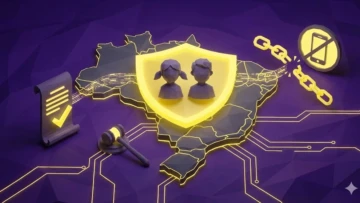
The Brazilian Federal Government is preparing a new decree to tighten access controls on online betting, pornography, and other harmful content, aiming to protect minors from digital exposure. The measure continues Brazil’s growing regulatory push to manage youth interaction with online platforms, following earlier restrictions introduced in 2025.
A draft version of the decree details the introduction of strict age verification systems for both websites and app stores. These systems will prevent minors from viewing or downloading apps and content deemed inappropriate or illegal under Brazilian law.
Websites carrying advertisements for sensitive sectors — including betting, adult entertainment, alcohol, dating platforms, and weapons — will also be responsible for verifying user age before access is granted.
New Age Verification Model
How the Decree Would Work
According to O Globo, the decree is part of an upcoming digital protection law expected to take effect in March 2026, with enactment likely by the end of February under President Luiz Inácio Lula da Silva’s administration.
The decree focuses on establishing a comprehensive national age verification system, ensuring that:
- Users cannot self-declare age information.
- Verification relies on official identification mechanisms, supported by a government-managed framework.
- Social media accounts for users under 16 must be linked to a parent or legal guardian.
Unlike some international measures — such as Australia’s blanket social media restrictions on teens — Brazil’s approach focuses on controlled supervision rather than outright prohibition.
Privacy Protection at the Core
To address privacy concerns, the draft decree specifically prohibits the tracking or storage of personal identification data, browsing histories, or any verification logs. Collected information may only serve for identity confirmation, ensuring compliance with Brazil’s General Data Protection Law (LGPD).
Wider Global Movement on Youth Digital Safety
International Context and European Trends
Brazil’s initiative aligns with a broader global movement for youth digital safety.
- Spain recently announced its own plan to ban social media use among teenagers.
- At least ten other European countries, along with the European Union, are exploring similar age-focused online restrictions.
The wave of age-verification legislation reflects rising global concern about exposure to exploitative and harmful online content — especially through online gambling and explicit material.
Brazil’s Expanding Digital Regulation Framework
From Social Media Oversight to AI Governance
The proposed decree arrives as part of a wider effort by Brazil’s government to expand oversight of online platforms and hold technology companies accountable for harmful content.
Following the January 8, 2023, unrest, debates on digital regulation intensified but briefly stalled amid opposition criticism of potential censorship risks. Nonetheless, Brazil’s Supreme Federal Court later ruled that big tech platforms can be held liable for illegal content posted by users — paving the way for new, stronger measures.
In parallel, lawmakers are advancing a separate bill on artificial intelligence misuse, signaling a new phase in the country’s digital governance agenda—one that blends safety, accountability, and user privacy.
Summary
Brazil’s draft decree marks a decisive shift in the country’s approach to youth protection online, combining mandatory age verification with privacy safeguards. By balancing regulation, parental oversight, and accountability for platforms, the move places Brazil among a growing group of nations developing stricter digital protection standards for minors.