
Walking into SiGMA in Lisbon or Affiliate World in Dubai, one thing is immediately clear: the expo floor has its own rhythm. Dozens of booths, hundreds of meetings, and thousands of participants from around the world. Amidst this international buzz, Russian-speaking teams stand out—they move confidently, almost like they’re at home.
But what exactly sets them apart? How do they differ from their Western peers, and why do conferences like MAC in Yerevan serve as a concentrated hub of knowledge, deals, and expertise? Here’s an inside look.
History and Approach: From Local Forums to Global Cases
“The difference between CIS and Western teams is immediately noticeable in negotiations,” says Affbuddha. “Western players often start with invoices, KPIs, and approvals through management. In the CIS, much is built on trust, testing, and proven case studies.”
The Russian-speaking performance marketing school developed under challenging conditions—unstable infrastructure, limited resources, and complex regulations. Early iGaming projects, forums, and arbitrage chats in the 2000s served as experimental playgrounds.
Today, CIS teams are distinguished by strong analytical skills, proprietary trackers, anti-detect solutions, and process automation. According to AffiliateFix, roughly 70% of top arbitrage teams handling global offers have Russian-speaking roots.
Western experts recognize this unique approach. Ashish Gaba, an international media buying consultant, explains:
“CIS teams are more direct and results-oriented. They want the numbers, terms, and timelines, often cutting through formalities. Western players, especially from the US and UK, tend to focus on relationship-building first, with longer sales cycles and more emphasis on documentation. Both approaches work, but without mutual understanding, friction can arise.”
From Local Meetups to Global Stages
CIS teams are no longer just a regional phenomenon. They now actively participate in major international conferences:
- SiGMA (Lisbon)
- Affiliate World (Bangkok, Dubai)
- iGB Affiliate (London)
- Web Summit
Erdem, CEO of ROYAL PARTNERS, notes:
“Western teams respect work-life balance: the day ends, chat goes silent, everything is formalized in contracts. CIS teams are more flexible and make decisions faster.”
Speed matters. According to Statista, the global iGaming and affiliate marketing market was valued at $59 billion in 2023, and rapid decisions in Tier‑1 geos can boost revenue by 20–30%.
Ashish Gaba adds a Western perspective:
“Conferences compress months of relationship-building into a few days. Conversations over coffee often lead to the most meaningful collaborations. For companies like Worify, every major international conference opens doors to clients and partners that cold outreach alone would never reach.”

Approach and Cultural Nuances
CIS teams are often described as “hardcore”: willing to take risks, test unconventional hypotheses, and pivot strategies on the fly.
Western teams, by contrast, tend to operate structurally: CRM, reporting, and pre-evaluations.
“CIS teams’ main strength is decision speed and working through horizontal networks,” says Affbuddha. “At conferences, we pre-select priority booths, schedule meetings, test trackers, and align launch plans—all within hours.”
Ashish Gaba adds:
“Stereotypes still exist: CIS teams are seen as technically brilliant but hard to approach, or operating in a ‘grey zone.’ In reality, the community is diverse. Russian-speaking professionals at conferences are often the most knowledgeable when it comes to media buying and traffic generation.”
Community as a Secret Weapon
“People know their own,” notes Affbuddha. “New tools are tested within the CIS network and almost always work when scaled globally.”
Horizontal connections via chats, private meetups, and shared experience give a competitive edge: ideas move faster, and knowledge is applied immediately on international projects.
MAC, with 5,000+ participants, 200 booths, and hundreds of meetings, becomes a concentrated network hub. Expertise translates directly into deals, offers, and traffic. The conference functions as a physical bridge between the CIS and the global market.
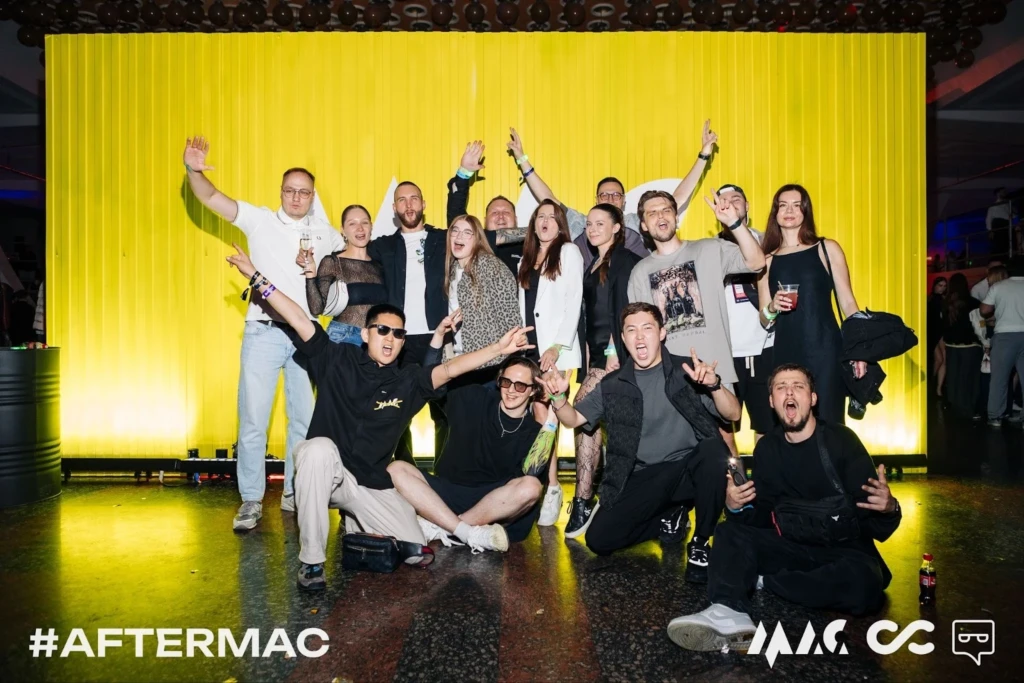
Erdem emphasizes:
“At MAC, the results of personal meetings and rapid decisions are hard to measure through social media—they translate immediately into deals and revenue.”
How CIS Teams Operate on Conference Floors
The key advantage of Russian-speaking teams is readiness to act in real time.
A typical workflow:
- Prioritizing booths and offers
- Meetings with C-level executives
- Testing trackers and aligning launch plans
- Rapid follow-up and multi-geo rollout
Erdem explains:
“For Western teams, similar communication often takes days or weeks: approvals, email chains, managers.”
Ashish Gaba adds:
“The best deals happen when both sides respect each other’s pace and priorities. Conferences allow months of negotiations to be compressed into days, which benefits teams ready to move quickly.”
CIS Performance Marketing on the Global Stage
CIS teams are no longer regional players. They are agile, fast, and capable of building horizontal networks that operate on a global scale.
MAC serves as a meeting point of worlds. CIS expertise becomes tangible: deals, offers, traffic, and technology converge in one space. The Russian-speaking performance school isn’t just surviving—it is setting standards for the global affiliate and iGaming industries, demonstrating how speed, competence, and networked decision-making drive real results.