

The gold rush is over; the industrial revolution of intelligence has begun.
Back in 2023 and 2024, the world was captivated by the novelty of generative AI. People were amazed that a computer could write a poem or generate an image of a cat in space. It was a time of experimentation, hype, and wild speculation.
Welcome to 2026. The landscape has settled. AI is no longer a shiny new toy; it is the fundamental infrastructure of the modern digital economy. It’s integrated into our operating systems, our browsers, and our daily workflows. The question isn’t “Can AI do this?” but rather, “How efficiently can I integrate AI to do this at scale?”
Making money with AI in 2026 is less about finding a “magic loophole” and more about understanding how to leverage mature technologies to provide massive value. It’s about moving from being just a “prompter” to being an architect of autonomous workflows and personalized experiences. The barrier to entry for creation has practically vanished; the new barrier is strategic application.
In this comprehensive guide, we will explore the reality of the AI economy in 2026, the essential toolkit you need, and over ten detailed, actionable strategies to generate significant income in this new era.
Why Make Money with AI in 2026
If you are still operating your business or freelance career the way you did in 2024, you are already behind. The fundamental reason to leverage AI for income in 2026 is simple: compounding leverage.
In the past, doubling your income usually meant doubling your hours or hiring more staff. Today, doubling your output might just mean refining an AI agent’s workflow or upgrading your compute capacity.
The economy of 2026 rewards speed, personalization, and hyper-niche expertise. AI allows a single individual to operate like a traditional agency of ten people. It allows small businesses to offer 24/7 personalized customer service that previously only Fortune 500 companies could afford.
The divide in 2026 is stark: there are those who use AI to amplify their capabilities, and those who are being displaced by the former. Choosing to make money with AI is choosing to be on the winning side of this efficiency divide.
Statistics Defining the 2026 AI Landscape
To understand the opportunity, we must look at the numbers that define the current market:
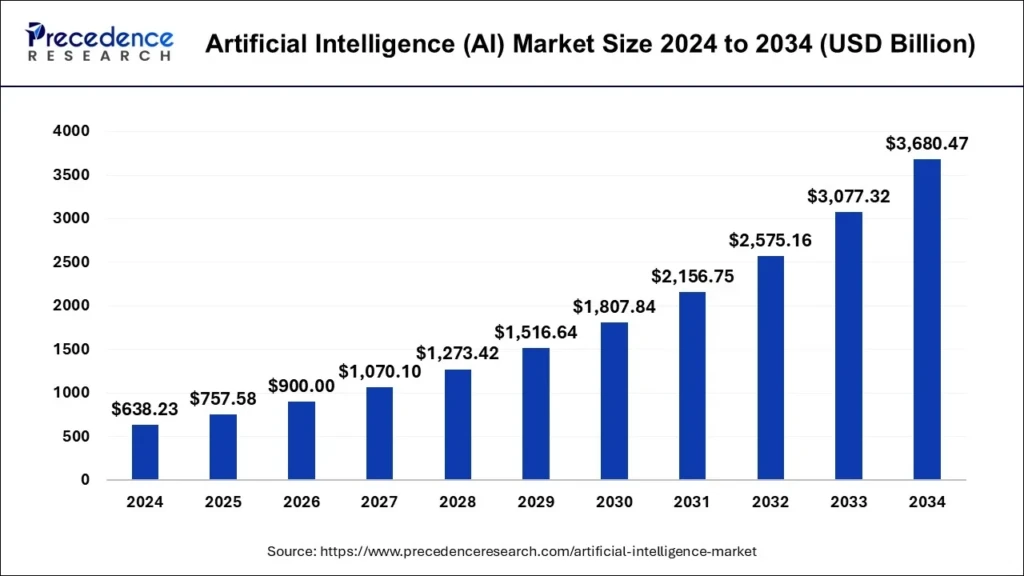
- The AI Market Valuation: By 2026, the global AI market size has surpassed the trillion-dollar mark globally, driven heavily by the widespread adoption of generative media and autonomous business agents.
- Productivity Gains: Analysts estimate that knowledge workers effectively utilizing AI copilots and agent swarms in 2026 are seeing productivity boosts of over 60% compared to their non-AI counterparts, fundamentally changing project timelines and cost structures.
- Content Saturation vs. Quality Discovery: While the volume of AI-generated content has exploded by over 5,000% since 2023, the market value has shifted entirely to curated, verified, and high-quality personalized content. Generic AI content is now effectively worthless noise.
- Freelance Shift: Over 70% of high-earning digital freelancers in 2026 report that they use AI tools for at least half of their workflow, shifting their role from “creator” to “editor and strategist.”
What AI Tools to Use to Make Money
In 2026, we no longer talk about isolated “tools”; we talk about ecosystems and workflows. The standalone chatbot is less relevant than the integrated suite that connects generation to execution.
However, these ecosystems are built on foundational pillars. To make money, you need fluency in the leading platforms across text, visual, and autonomous categories.
Multimodal Foundations (Text, Code, Reasoning)
These are the “brains” of your operation. In 2026, these models handle text, analyze complex images, understand voice, and write intricate code seamlessly.
- OpenAI’s Leading Model (e.g., GPT-5/6 iteration): Still the industry standard for general-purpose reasoning, complex coding tasks, and nuanced creative writing. Its API is the backbone of countless profitable applications.
- Google DeepMind’s Gemini Ultra (Mature Iteration): The powerhouse for deeply integrated tasks, especially those requiring real-time data access via Google search and massive context windows for analyzing entire books or databases at once.
- Anthropic’s Claude (High-Tier Version): Renowned in 2026 for its ethical guardrails, low hallucination rates, and superior ability to handle massive textual datasets for summarization and analysis. Excellent for corporate/B2B applications.
Hyper-Realistic Visual & Video Synthesis
The “uncanny valley” is mostly a thing of the past. 2026 tools create visuals indistinguishable from reality.
- Midjourney (Current Version): The reigning champion for artistic, stylized, and photographic image generation. Essential for branding, concept art, and high-end visual content.
- Runway (Gen-4 or equivalent) & Sora iterations: The leaders in text-to-video. In 2026, these tools can generate coherent, minutes-long video clips with consistent characters, usable for marketing, entertainment, and education.
Autonomous Agents & Workflow Automation
This is where the real money is made in 2026. These tools don’t just generate; they do.
- AutoGPT Evolved / Microsoft AutoGen: Frameworks that allow you to spin up multiple AI “agents” that can communicate with each other to complete complex tasks—like researching a topic, writing a report about it, critiquing the report, and then emailing it to a client without human intervention.
- Zapier AI & Make (formerly Integromat): The glue of the internet. Their AI capabilities now allow you to describe a workflow in plain English (“When a high-value lead comes in, research their company using AI and draft a personalized email”), and they build the automation for you.
11 Best Ways to Make Money with AI in 2026
We have moved past simple “freelance writing with ChatGPT.” The strategies below require a blend of strategic thinking, technical setup, and creative direction.
1. Developing Niche “AI Agent Employees” for SMBs
Small and Medium Businesses (SMBs) are desperate for AI efficiency but lack the technical know-how to implement it. In 2026, selling “packaged employees” is a massive industry.
- The Strategy: Don’t sell “AI consulting.” Sell a solution to a specific pain point. Create a specialized AI agent workflow tailored for a niche. For example, an “AI Lead Qualifier for Dentists” that handles web chat, qualifies leads based on insurance questions, and books appointments into their CRM.
- Tools: OpenAI API / Claude API (the brain), Voiceflow or Relevance AI (to build the agent logic), Zapier (to connect to CRM).
- Execution: Identify a niche with repetitive administrative tasks. Build a robust agent that solves 90% of that task autonomously. Sell it as a subscription service (SaaS – Software as a Service) or a high-ticket setup fee with monthly maintenance.
2. Running a “Faceless” Hyper-Niche Media Empire
The days of generalist influencers are waning. 2026 is about hyper-niche, high-volume, high-quality content delivered via video.
- The Strategy: Identify very specific niches (e.g., “Urban Gardening for Apartment Dwellers,” “Historical Analysis of 18th Century Naval Battles,” “Rust Programming Language Tutorials”). Use AI to generate scripts, hyper-realistic voiceovers, and relevant video b-roll/imagery at scale.
- Tools: ChatGPT/Claude (Scripting & Research), ElevenLabs (Ultra-realistic Voice Synthesis), Midjourney/Runway/Sora (Visuals and Video clips), CapCut/Premiere Pro with AI editing features (Assembly).
- Execution: Build a workflow where you feed a topic to an AI, it researches and scripts it, generates necessary visual assets, and an AI video editor compiles a draft. Your role is quality control and platform strategy (YouTube Shorts, TikTok, Instagram Reels). Monetize through ad revenue, sponsorships, and affiliate products related to the niche.
3. High-End AI-Augmented Freelance Coding
While “AI can code” is true, “AI can build complex, secure, enterprise-grade systems without supervision” is false. The demand for skilled developers who use AI as a force multiplier is higher than ever.
- The Strategy: Position yourself as a “10x Developer.” Use AI copilots not just to write boilerplate code, but to architect systems, write comprehensive tests, debug complex legacy codebases, and translate code between languages instantly. You can take on larger projects with tighter deadlines than traditional devs.
- Tools: GitHub Copilot Workspace / Cursor (The AI-native IDEs of 2026), GPT-6 (for high-level architecture planning).
- Execution: Offer services on premium freelance networks (Toptal, Braintrust). Focus on complex migration projects or MVP (Minimum Viable Product) builds where speed is critical. Charge premium rates based on project value, not hours worked.
4. Personalized AI Education & Coaching Bots
Static online courses are dying. People in 2026 demand interactive, personalized learning that adapts to their pace.
- The Strategy: Take your expertise in a subject (fitness, finance, language learning) and distill it into a fine-tuned AI model. This AI becomes a 24/7 coach for your clients. It remembers their past struggles, tracks their progress, and offers customized advice.
- Tools: Custom GPTs (OpenAI platform) or platforms like Character.ai for personality-driven interfaces; backend databases to store user progress.
- Execution: Create a high-ticket coaching program where the primary delivery mechanism is access to your specialized AI coach, supplemented by weekly human check-ins. The AI handles daily accountability and questions, allowing you to scale your coaching practice infinitely.
5. AI-Driven Data Journalism and Newsletter Curation
In 2026, information overload is the primary problem. People will pay for clarity and synthesis.
- The Strategy: Use advanced LLMs with large context windows to monitor hundreds of sources within a specific industry (e.g., Biotech regulations, Crypto regulations, AI ethics papers). The AI filters noise, summarizes key developments, and connects disparate dots that a human might miss.
- Tools: Google Gemini Ultra (for massive context processing), Feedly AI (for source monitoring), Beehiiv/Substack (for delivery).
- Execution: Publish a premium, high-cost newsletter aimed at executives or investors in that niche. Your value proposition is saving them 20 hours of reading a week while ensuring they miss nothing critical.
6. Creating and Selling Stock AI Assets (3D, Video, Audio)
The demand for digital assets for virtual worlds, games, and marketing is insatiable.
- The Strategy: Move beyond simple 2D images. Use AI tools that generate 3D meshes, rigged characters, environmental textures, and short video clips that can be used in video production or game development.
- Tools: Midjourney (for textures/concepts), specialized AI-to-3D generators (evolving tools like Luma AI or CSM), Suno/Udio (for background music tracks).
- Execution: Build portfolio packs on marketplaces like Unreal Engine Marketplace, Unity Asset Store, or TurboSquid. Focus on cohesive packs (e.g., “Cyberpunk Cityblock Assets” or “Lo-Fi Beats for Streaming”).
7. AI Optimization Consultant (The “Human-in-the-Loop” Expert)
Companies have adopted AI, but their implementations are often inefficient, hallucinate wildly, or expose them to liability.
- The Strategy: Act as an auditor and optimizer for existing corporate AI systems. Review their prompt engineering, test their RAG (Retrieval-Augmented Generation) systems for accuracy, and ensure ethical guardrails are working.
- Tools: Specialized AI benchmarking and testing tools, enterprise-grade LLM APIs for comparative testing.
- Execution: Offer high-value consulting audits. Deliver a report detailing vulnerabilities in their current AI setup and a roadmap for optimization. This is B2B consulting suited for those with a technical background.
8. Hyper-Local SEO and Content Strategy at Scale
Local businesses need visibility, but writing thousands of localized pages is impossible for humans.
- The Strategy: Use AI to generate high-quality, factually accurate “service area pages” for businesses like plumbers, lawyers, or real estate agents across hundreds of surrounding towns. The key in 2026 is ensuring these aren’t spammy; they must offer genuine local value.
- Tools: GPT-6/Claude for writing, tools that integrate local data maps and statistics into the prompt context to ensure accuracy.
- Execution: Partner with an SEO agency or serve clients directly. Offer a package to dominate local search results by deploying hundreds of unique, helpful, locally-focused landing pages in a matter of weeks.
9. Writing and Self-Publishing Hyper-Niche Non-Fiction
While AI fiction is flooded, high-quality, research-backed non-fiction on emerging topics is in demand.
- The Strategy: Identify extremely specific technical or business topics that are too new to have many books written about them (e.g., “Managing Remote VR Teams using Apple Vision Pro”). Use AI agents to perform deep research, synthesize current whitepapers, and structure a comprehensive book.
- Tools: AutoGPT/BabyAGI variants for deep research, Claude for long-form structural writing and editing.
- Execution: You act as the editor-in-chief. You guide the AI, verify the facts rigorously, add human case studies, and ensure a unique voice. Publish on Amazon KDP and other platforms, aiming to be the definitive “first book” on emerging trends.
10. Custom AI Art Generation for Personalized Merchandise
Print-on-demand is mature, but AI allows for “segment-of-one” personalization.
- The Strategy: Instead of pre-designing shirts, build a storefront that lets users input elements of their life (e.g., their dog’s breed, their hobby, their city) and uses an integrated image generator API to create a unique, artistic design instantly that they can order on a product.
- Tools: Midjourney API or Stable Diffusion XL via an API provider, Printful/Printify (for fulfillment), Shopify (e-commerce platform).
- Execution: This requires technical setup to connect the user input form directly to the image generation API and then to the printing service product mockup. Once running, it’s a highly automated income stream.
11. Language Localization and Cultural Adaptation Services
Translation is solved, but localization—adapting content culturally—is hard.
- The Strategy: Use AI to translate content, but then use secondary AI agents prompted with specific cultural nuances, idioms, and sensitivities of the target region to review and adapt the translation.
- Tools: DeepL (for initial translation), GPT-6/Claude (prompted as cultural experts for specific regions).
- Execution: Offer services to YouTubers, e-commerce brands, or software companies looking to expand globally. You provide a service that is faster than human translation agencies but higher quality than raw Google Translate.
How Affiliate Marketing Can Help You Earn More
Affiliate marketing in 2026 is no longer about spamming links. It’s about data-driven, personalized recommendations at scale, powered by AI. It is the perfect accelerant for many of the business models listed above.
The AI-Affiliate Nexus:
- Predictive Analysis: Instead of guessing what products your audience wants, AI tools analyze user behavior on your website or newsletter to predict purchasing intent. If an AI reads a user’s comment history and sees they are struggling with video editing, it can automatically serve them dynamic content reviewing your top affiliate video software.
- Automated “Review” Content: If you run a niche site, AI can monitor the release of new products in your niche. Agents can automatically gather specs, compare them to previous models, read initial user reviews, and draft a comparison article containing your affiliate links moments after a product launch.
- Hyper-Personalized Email Sequences: When someone joins your list, AI doesn’t just send a generic welcome sequence. It analyzes how they signed up and tailors an infinite email sequence that adapts based on which links they click. If they click a link about high-end cameras, the subsequent emails shift focus to high-ticket photography gear affiliations.
Integration Strategy: In 2026, you don’t just “add affiliate links.” You build an AI system that understands who the user is and when they are ready to buy, presenting the right offer at the exact moment of highest conversion probability.
Conclusion
By 2026, the “AI revolution” has become the “AI reality.” The shock of the new has worn off, replaced by the immense utility of the mature technology.
Making money in this landscape doesn’t require you to be a machine learning engineer. It requires you to be adaptable, strategically minded, and willing to view AI not as a threat, but as the ultimate lever for your ambition.
The winners in 2026 are the synthesizers—those who can combine the generative power of AI with human judgment, creativity, and empathy to solve real problems. Whether you are building autonomous agents for small businesses, running a hyper-niche media empire, or offering high-end consulting, the toolkit is available.
The only question remaining is:
Are you going to watch the future happen, or are you going to build it and get paid?
FAQ
Q1: Do I need to know how to code to make money with AI in 2026?
A: No, but “coding” has changed. You don’t need to know Python or C++ syntax fluently, as AI can handle the heavy lifting there. However, you do need “algorithmic thinking”—the ability to break a problem down into logical steps that an AI can execute. Knowing how to chain different AI tools together using no-code platforms (like Zapier or Make) is the new literacy required for most of the high-earning strategies mentioned here.
Q2: Won’t the market be oversaturated with AI content, making it hard to earn?
A: Yes, the market is absolutely flooded with low-quality, generic AI content. That market is dead. The opportunity in 2026 lies entirely in high-quality, human-guided, hyper-niche content and services. AI is used to handle the volume and research, but your unique angle, curation, and quality control are what make it monetizable. The saturation of noise actually increases the value of signal.
Q3: How much money do I need to start an AI side hustle in 2026?
A: The monetary barrier is exceptionally low. Most powerful AI models offer affordable monthly subscriptions (around $20-$50/month for premium tiers), and automation platforms have free or cheap starter tiers. The real investment in 2026 is time and learning. Mastering prompt engineering, understanding how to build agent workflows, and staying updated on the rapidly evolving tool ecosystem requires a significant investment of mental energy.