


The first domino has fallen in what federal prosecutors describe as one of the most brazen sports corruption schemes in modern American history. On Wednesday, a federal judge in Brooklyn sentenced Timothy McCormack to two years in prison for his role in a widening conspiracy to defraud sports betting companies using inside information provided by NBA players.
The sentencing of McCormack, a self-described gambling addict who became a key cog in a machine designed to rig “prop bets,” marks a significant pivot point for the U.S. Department of Justice as it continues to pursue current and former professional athletes alleged to have compromised the integrity of the game for profit.
While McCormack’s defense team pleaded for leniency based on his history of addiction, U.S. District Judge LaShann DeArcy Hall delivered a sentence that straddled the line between rehabilitation and retribution, ultimately siding with the government’s assertion that the integrity of professional sports is a matter of public interest that demands protection.
The First Sentencing
Standing before a packed courtroom in the Eastern District of New York, McCormack appeared visibly shaken as Judge DeArcy Hall handed down the 24-month custodial term. Prosecutors had initially sought a sentence of up to four years, portraying McCormack not merely as a degenerate gambler, but as a sophisticated operator who exploited confidential information to steal hundreds of thousands of dollars from licensed sportsbooks.
McCormack pleaded guilty to conspiracy to commit wire fraud, admitting that he placed wagers based on non-public information regarding the health and playing status of NBA players. Specifically, McCormack capitalized on the knowledge that certain players would remove themselves from games early, ensuring that wagers on the “under” for their individual performance statistics would win.
“I’ve struggled with a gambling addiction for more than half my life,” McCormack told the court in a brief statement before sentencing. His defense attorneys argued that his participation in the scheme was driven by compulsion rather than greed, characterizing him as a pawn in a larger game orchestrated by more powerful figures.
However, Judge DeArcy Hall rejected the notion that addiction absolved McCormack of responsibility. While acknowledging his struggles, she emphasized the corrosive effect of his actions on the public trust.
“There is no question this is a serious crime,” Judge DeArcy Hall stated. “Sports matters to me as an individual, as it should to society. They are supposed to be the best of themselves, and we all root for these teams. This undermines that.”
The “Prop Bet” Loophole
The McCormack case has shone a harsh spotlight on the vulnerabilities of the modern sports betting ecosystem, particularly the booming market for “proposition bets” (prop bets). Unlike traditional wagers on the final score of a game, prop bets allow gamblers to wager on individual player statistics—points scored, rebounds, assists, or three-pointers made.
Federal investigators revealed that the conspiracy exploited a specific weakness in this market: the “Under.”
In a typical scenario, a sportsbook sets a line for a player—for example, 10.5 points. If a bettor wagers the “under,” they win if the player scores 10 points or fewer. The conspiracy allegedly involved players who, indebted to gamblers or seeking profit themselves, would agree to check out of a game early claiming illness or injury. By playing only a few minutes and scoring zero or very few points, the players guaranteed that the “under” bets would cash.
Prosecutors outlined how McCormack and his co-conspirators placed aggressive wagers on these specific lines often just minutes before tip-off, utilizing insider knowledge that the player in question had no intention of finishing the game.
“Without people like the defendant, these schemes can’t work,” Assistant U.S. Attorney David Berman told the court. He described the operation as a “cold, hard fraud” that turned the uncertainty of sport into a guaranteed payout for the conspirators.
The Jontay Porter Connection
While McCormack is the first to be sentenced, he is far from the most famous name attached to the scandal. The investigation exploded into the public consciousness in 2024 with the lifetime ban of former Toronto Raptors forward Jontay Porter.
Porter, the brother of Denver Nuggets star Michael Porter Jr., became the face of the scandal after the NBA’s internal investigation found he had disclosed confidential information to sports bettors and limited his own participation in games for betting purposes.
Court documents reveal a desperate narrative surrounding Porter. Burdened by significant gambling debts, Porter allegedly agreed to perform “specials”—exiting games early—to settle his ledger with a group of bettors that included McCormack.
In one instance cited by prosecutors, Porter played just three minutes in a January 26, 2024 game against the Los Angeles Clippers before exiting with a purported eye injury. In the hours leading up to the game, betting interest on the “under” for Porter’s three-pointers skyrocketed, becoming the most profitable prop bet of the night for DraftKings.
Porter has since pleaded guilty to federal conspiracy charges and is currently awaiting sentencing. His cooperation with authorities has reportedly provided the roadmap that led not only to McCormack but potentially to even bigger targets.
The Terry Rozier Bombshell
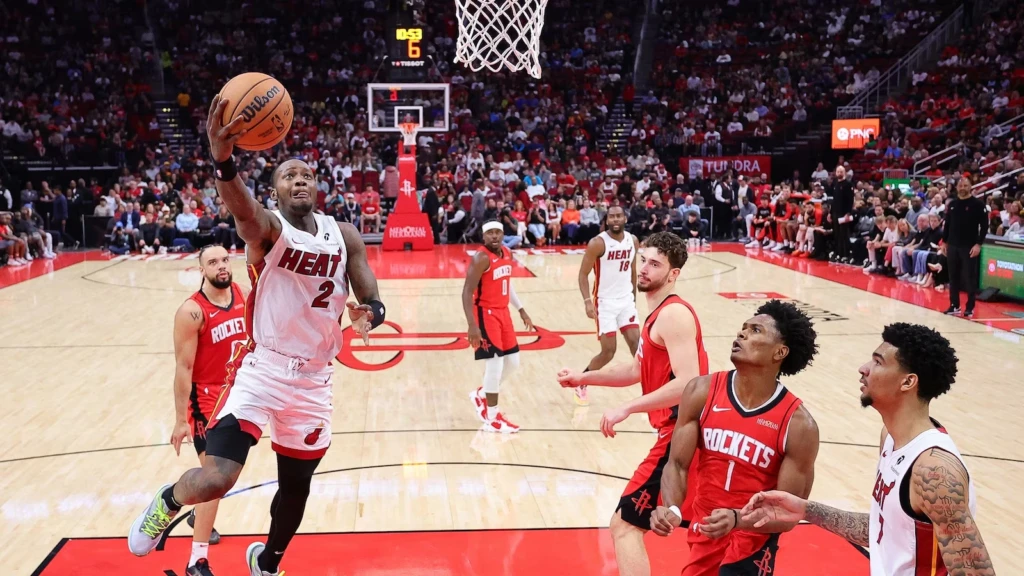
The shadow looming largest over the proceedings is that of Terry Rozier. The veteran point guard, currently on unpaid leave from the Miami Heat, faces active federal charges of wire fraud and conspiracy to commit money laundering.
Unlike Porter, who was a fringe rotation player on a two-way contract, Rozier is a legitimate NBA star with a massive contract, making his alleged involvement all the more shocking. Rozier has pleaded not guilty and remains free on a $3 million bond.
The allegations against Rozier center on a March 2023 game during his tenure with the Charlotte Hornets. Prosecutors allege that associates of Rozier placed significant wagers on his “under” statistics shortly before he exited the game with “foot discomfort” after playing fewer than 10 minutes.
During McCormack’s sentencing, references to “Co-Conspirator 2″—widely understood to be Rozier—painted a picture of a conspiracy that permeated the locker room. The government alleges that the scheme was not limited to a single desperate player like Porter but involved a network of athletes willing to trade their professional integrity for quick cash.
Rozier’s legal team has aggressively moved to dismiss the charges, arguing that breaking sportsbook rules does not constitute federal wire fraud. His attorneys claim that the indictment fails to prove Rozier agreed to any money laundering scheme and that his only role was providing non-public information to a friend—conduct they argue falls short of criminal fraud.
Rozier is due back in court in March, and the outcome of his case could set a massive legal precedent regarding the liability of professional athletes in the age of legalized gambling.
The Integrity of the Game
The sentencing of Timothy McCormack is a victory for federal prosecutors, but it has done little to quell the anxiety within the league offices in New York City. For NBA Commissioner Adam Silver, the scandal represents an existential threat.
The NBA has embraced sports betting more aggressively than perhaps any other American league. Partnerships with FanDuel and DraftKings are woven into the fabric of broadcasts, and betting lines are discussed openly by analysts. The league argues that regulation provides transparency—that monitoring software can detect irregular betting patterns like those on Porter’s props.
However, the McCormack case demonstrates that detection often happens only after the fraud has occurred. The damage to the product—the suspicion that a missed shot or a sudden substitution is motivated by a parlay rather than basketball strategy—is harder to quantify and harder to repair.
Judge DeArcy Hall touched on this fragile trust during sentencing. “It is about sports generally,” she mused. “What do sports mean to this country?”
By participating in a scheme to fix the outcomes of micro-events within a game, McCormack and his co-conspirators attacked the fundamental promise of sport: that the outcome is decided by skill and chance, not by a script written in a betting slip.
A Warning to the Market
The two-year sentence serves as a stark warning to the “touts,” “sharps,” and VIP bettors who operate in the gray areas of the sports betting world. For years, the use of insider information in sports—such as knowing a quarterback is injured before the public does—was considered a sharp edge, not a crime.
This prosecution redefines those boundaries. It establishes that conspiring with an athlete to manipulate their performance for betting purposes is not “advantage play”; it is federal wire fraud punishable by prison time.
“This is not a victimless crime,” said U.S. Attorney Breon Peace in a statement following the sentencing. “Whether on the court or in the casino, the integrity of the game must be protected. Those who seek to corrupt it for personal gain will face the full weight of the justice system.”
What Comes Next?
As Timothy McCormack prepares to surrender to the Bureau of Prisons, the legal saga is far from over.
Jontay Porter awaits a sentencing hearing that will likely define the baseline punishment for athletes who cooperate with federal investigators. His lifetime ban from the NBA is already in effect, but his freedom hangs in the balance.
Meanwhile, Terry Rozier’s defense team is preparing for what promises to be a high-profile battle in March. If the case goes to trial, it will likely expose the inner workings of NBA locker rooms and the pervasive reach of gambling culture in professional sports.
The industry is also bracing for potential regulatory blowback. Lawmakers in several states have already begun discussing bans on collegiate prop bets, and the NBA scandal provides ammunition for those who wish to see similar restrictions at the professional level.
For now, the message from the Eastern District of New York is clear: The game is watching you. And if you try to fix it, you will lose more than just your wager.