
For the past three years, the shirts of Brazilian football players have been the most expensive billboards in Latin America. Fueled by a deregulated “Grey Market” gold rush, hundreds of betting operators flooded the ecosystem, throwing millions of Reais at any club with a pulse in a desperate bid for brand awareness.
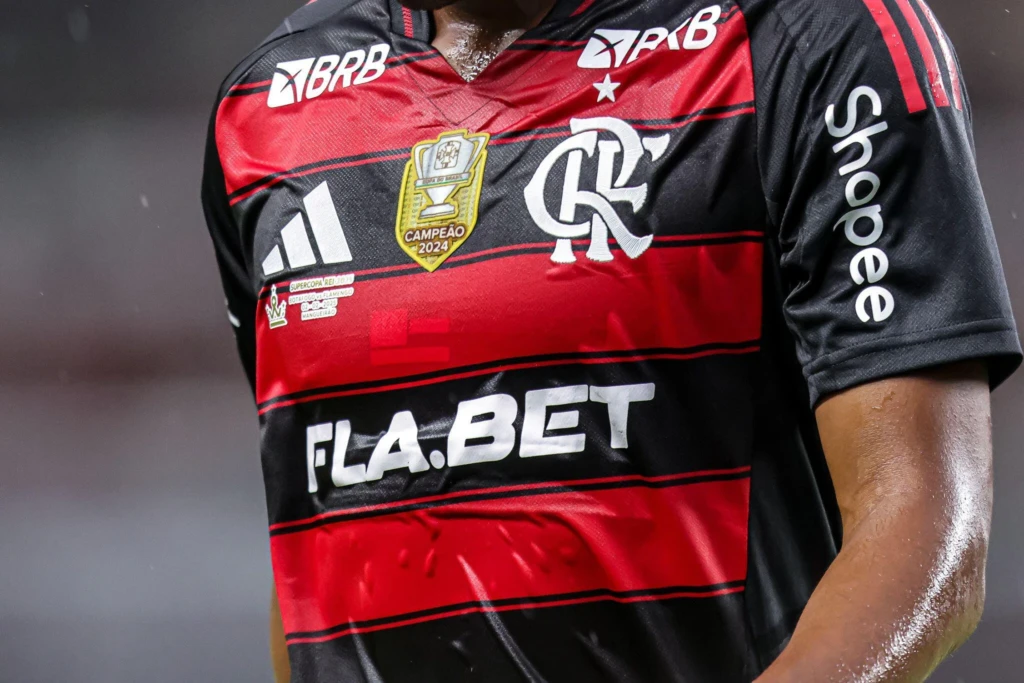
However, as the 2026 Campeonato Brasileiro Série A kicks off this week, the visual landscape of the pitch has changed dramatically. In a stark indicator of a market correction, six out of the 20 top-flight clubs currently have no primary betting sponsor on their kits.
According to a new report by iGaming Business (iGB), the era of “easy money” for Brazilian football clubs is officially over. Crushed by rising taxes, strict federal regulation, and the sheer financial unsustainability of 2024’s mega-deals, operators are pulling back. The market is bifurcating: giants like Betano are consolidating their dominance, while mid-tier operators are retreating to survive.
This article analyzes the rise and fall of the sponsorship bubble, the impact of the new 15% tax regime, and what the future holds for the financial relationship between Futebol and iGaming.
The Anatomy of the Bubble (2023-2025)
To understand the current crash, one must understand the height of the mania. Between 2023 and early 2025, Brazil was widely considered the “most accessible” betting market in the world. With no federal regulation in place, barrier to entry was low.
The “Grey Market” Arms Race
Fellipe Fraga, CBO of local operator EstrelaBet, describes this period as a chaotic land grab.
“What happened in the past years was a lot of companies competing for the same space. Due to lack of regulation, many companies had the money to start a business and spend on sponsorships to create brand awareness.”
This culminated in 2024, when 19 out of 20 Serie A clubs had a betting operator as their master sponsor (the sole exception being Red Bull Bragantino).
- The Peak: In early 2024, VaideBet signed a historic R$ 370 million ($71.2m) deal with Corinthians.
- The Record Breaker: Months later, Pixbet shattered that ceiling with a R$ 470 million ($90.4m) deal with Flamengo.
Clubs, realizing they held the keys to the kingdom, hiked their prices. Operators, fearing irrelevance, paid up. It was a classic economic bubble.
The Crash: Why the Market is Correcting in 2026
The bubble began to leak in mid-2024 and has fully deflated by the start of the 2026 season. Several structural factors have forced this correction.
A. The “VaideBet” Scandal & Pixbet Collapse
The first domino fell in June 2024, when the massive Corinthians-VaideBet deal was terminated abruptly amid corruption allegations regarding intermediaries. Then came the shock of August 2025: Pixbet terminated its record-breaking deal with Flamengo early. Rumors swirled that the operator had simply overextended itself.
- The Lesson: Spending 70+ days of revenue on a single shirt sponsorship (as estimated by H2 Gambling Capital) is not a sustainable business model.
B. The Regulatory Purge
On January 1, 2025, Brazil’s federal regulation officially kicked in.
- The Licensed Few: Only operators with a federal license could legally advertise. The herd of hundreds was culled down to approximately 80 licensed entities.
- The Cost of Compliance: The R$ 30 million license fee, combined with strict compliance costs, drained the marketing budgets of small-to-mid-tier operators.
C. The Tax Hammer
President Luiz Inácio Lula da Silva recently approved a gradual tax hike, settling on a 15% GGR Tax (Gross Gaming Revenue) for operators starting in 2028.
- Effective Tax Rate: When combined with ISS, PIS, and COFINS (corporate taxes), the effective tax burden for a Brazilian operator is nearing 50%.
- The Deposit Tax Threat: Legislators are currently debating an additional 15% tax on player deposits.
Elvis Lourenço, a Brazilian iGaming expert, notes the shift in mentality:
“Now every operator is doing the math. Taxes are increasing… This kind of sponsorship was inflated a little bit because every soccer club increased their prices.”
Faced with a 50% tax burden, operators can no longer afford to pay R$ 100 million for a logo on a shirt. Marketing is always the first budget line to be cut.
The “Haves” and “Have Nots”: Market Bifurcation
The retreat of the mid-market has created a stark divide in Brazilian football.
The Tier 1 Giants (Betano)
While small operators retreat, the giants are doubling down. Betano (owned by Kaizen Gaming) has effectively “won” the branding war.
- Strategies: They sponsor the league itself (Brasileirão Betano), the Copa America, and after Pixbet’s exit, they snapped up Flamengo.
- Financial Power: Analysts estimate Betano can cover the massive Flamengo sponsorship cost with just 13 days of revenue.
- The Result: Tier 1 operators are immune to the crisis. They will continue to pay premiums for top inventory (Flamengo, Palmeiras) because they need to maintain market share.
The Mid-Tier Crisis
The crisis is hitting the Tier 2 and Tier 3 operators—and by extension, the Tier 2 and Tier 3 football clubs. Andre Santa Ritta, partner at Pinheiro Neto Advogados, explains:
“The average operator in Brazil is struggling to survive today. They are suffering, so these guys are not very willing to pay a lot of money to be shown in soccer matches.”
This is why six clubs are currently sponsorless. These are likely mid-table teams that demanded 2024-level prices in a 2026 economy. The operators simply said “No.”
The Impact on Football Clubs
For Brazilian clubs, the party is over. Udo Seckelmann, head of gambling & crypto at Bichara e Motta Advogados, notes that clubs are “surprised” by the lack of offers.
- The Reality Check: Clubs budgeted for R$ 50m deals. The offers coming in are now R$ 15m-20m.
- The Danger: Many clubs leveraged their future sponsorship revenue to pay for player transfers and salaries. A 50% drop in sponsorship revenue could lead to a liquidity crisis for several Serie A teams in 2026.
However, Seckelmann argues that the “Gold Rush” left clubs in a better position than before. Even with the correction, Brazilian clubs are significantly wealthier than their Argentine or Uruguayan counterparts, largely due to the influx of betting money over the last three years.
Strategic Pivot: Beyond Football
If football is too expensive or saturated, where does the marketing money go? Fellipe Fraga of EstrelaBet suggests a strategic pivot away from the “Global Strategy” of football shirts toward “Local Strategies” in niche sports.
The ROI Question
Fraga raises a provocative point: Is Brazilian football actually worth the price?
- Global vs. Local: Sponsoring a Premier League team (like West Ham or Everton) buys you global visibility in China, USA, and Africa. Sponsoring a Brazilian team buys you… Brazil.
- The Pivot: Operators are now looking at:
- Motorsports: Stock Car Brazil and Formula 1 reach a wealthier demographic.
- UFC/MMA: Massive crossover appeal with betting demographics.
- American Football (NFL): Surprisingly growing fast in Brazil.
- Influencers: High-conversion, trackable ROI campaigns (CPA) rather than branding awareness (CPM).
Future Outlook: 2026 and Beyond
As we move deeper into 2026, the Brazilian market will resemble the mature markets of Europe.
- Consolidation: We will see mergers and acquisitions. Mid-tier operators who cannot afford sponsorship or taxes will sell their databases to the giants or exit the market.
- Sponsorship Bans? The ultimate threat looms. Following the UK and Spain examples, there is always a risk that the government could ban betting sponsors on shirts entirely to protect minors. If that happens, the revenue stream goes to zero overnight.
- The Rise of “Clean” Kits: For the first time in years, fans might buy jerseys that aren’t covered in betting logos. While bad for club finances, many fans welcome the aesthetic change.
Conclusion
The “Gold Rush” was fun while it lasted, but the hangover has arrived. The 2026 season marks the beginning of the “Rationalization Phase” of the Brazilian iGaming market.
Operators are no longer writing blank checks. They are calculating Customer Acquisition Costs (CAC) and Lifetime Value (LTV). If a shirt sponsorship doesn’t yield profitable players, they will cut it.
For the six clubs starting the season with empty chest spaces, the message is clear: Lower your prices, or get used to the blank space.